The Story
Ram finally gives the Power Wagon a Cummins diesel, adding huge torque—but deleting the winch.
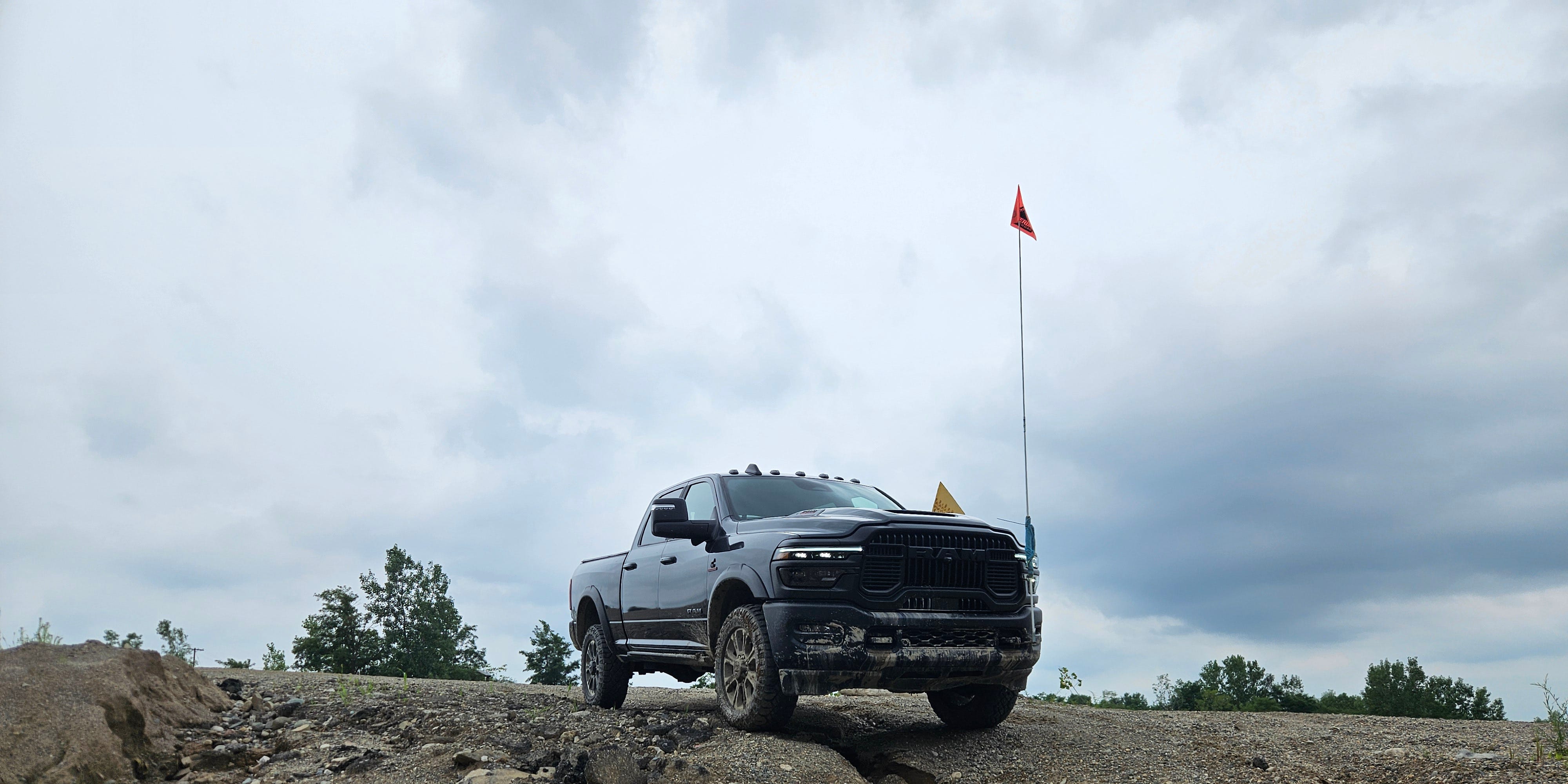
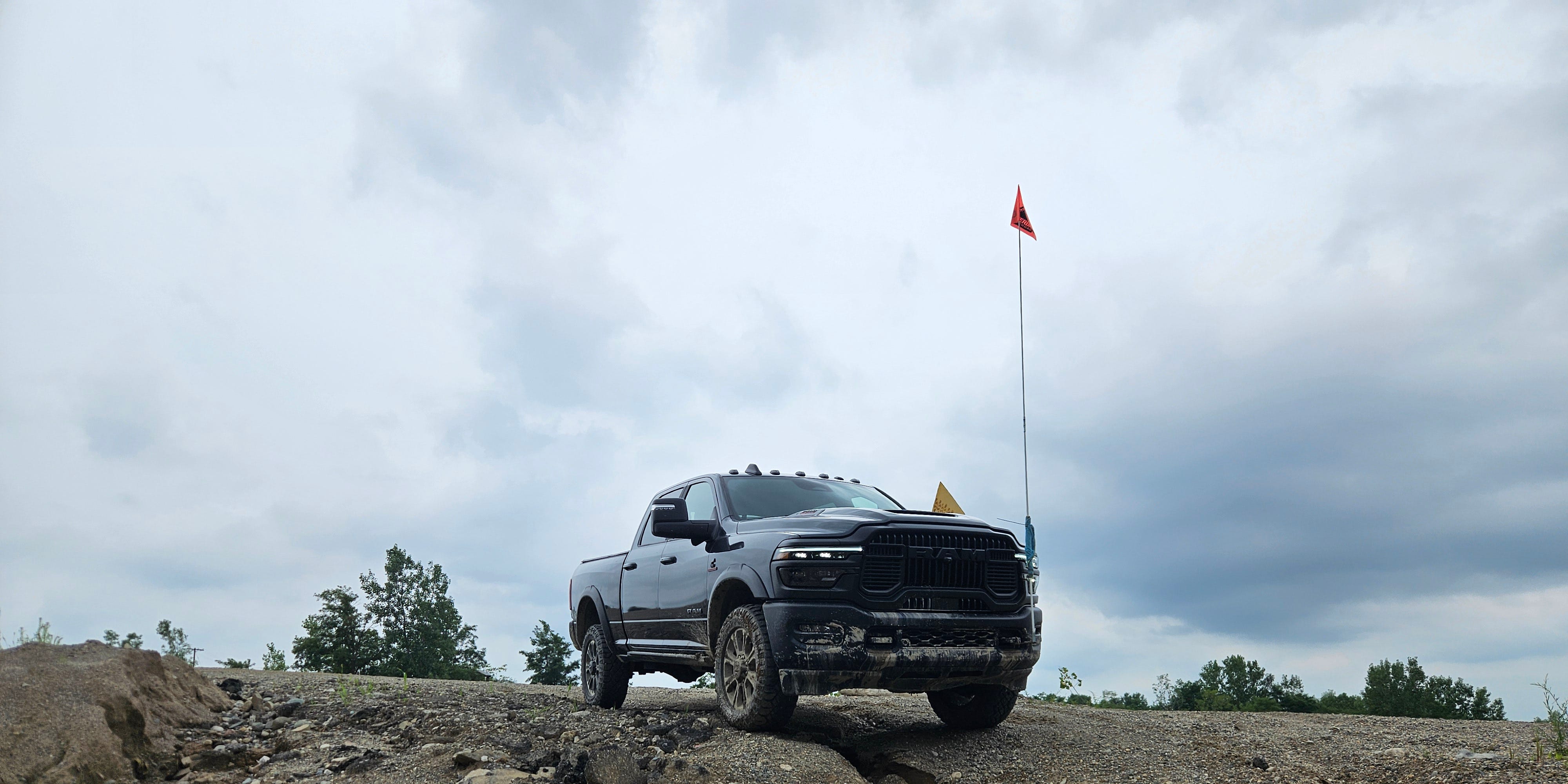
Lucas BellHaving failed to extract myself from the mud pit, I perched on the tailgate of the 2027 Ram 2500 Power Wagon and awaited the arrival of the next group of fellow wheelers. It took nearly 45 minutes for a group on motorcycles and side-by-sides to arrive, themselves unable to free the near four-ton 4x4 free from its suction-induced prison. Defeated, I signaled for the off-road park’s backhoe and readied my $50 penance. Even the most capable machines meet their match when their driver’s confidence gets too high.
Ram’s HD offerings have been a mainstay in my life since 2010, when, in a purely financial move, our family construction company transitioned away from Ford’s Super Duty lineup. The 6.7-liter Cummins engine quite literally kept food on the table, and a 3500 Chassis Cab (with the six-speed manual) was the vehicle I learned to drive in. I’ve spent more hours in these trucks than anything else on the market, and I have more real-world experience related to their capabilities than most. When Ram announced they would finally listen to customer demands and bring the 6.7-liter to the off-road-oriented Power Wagon model for 2027, I wanted to be first in line to evaluate this off-road twist on a familiar package.
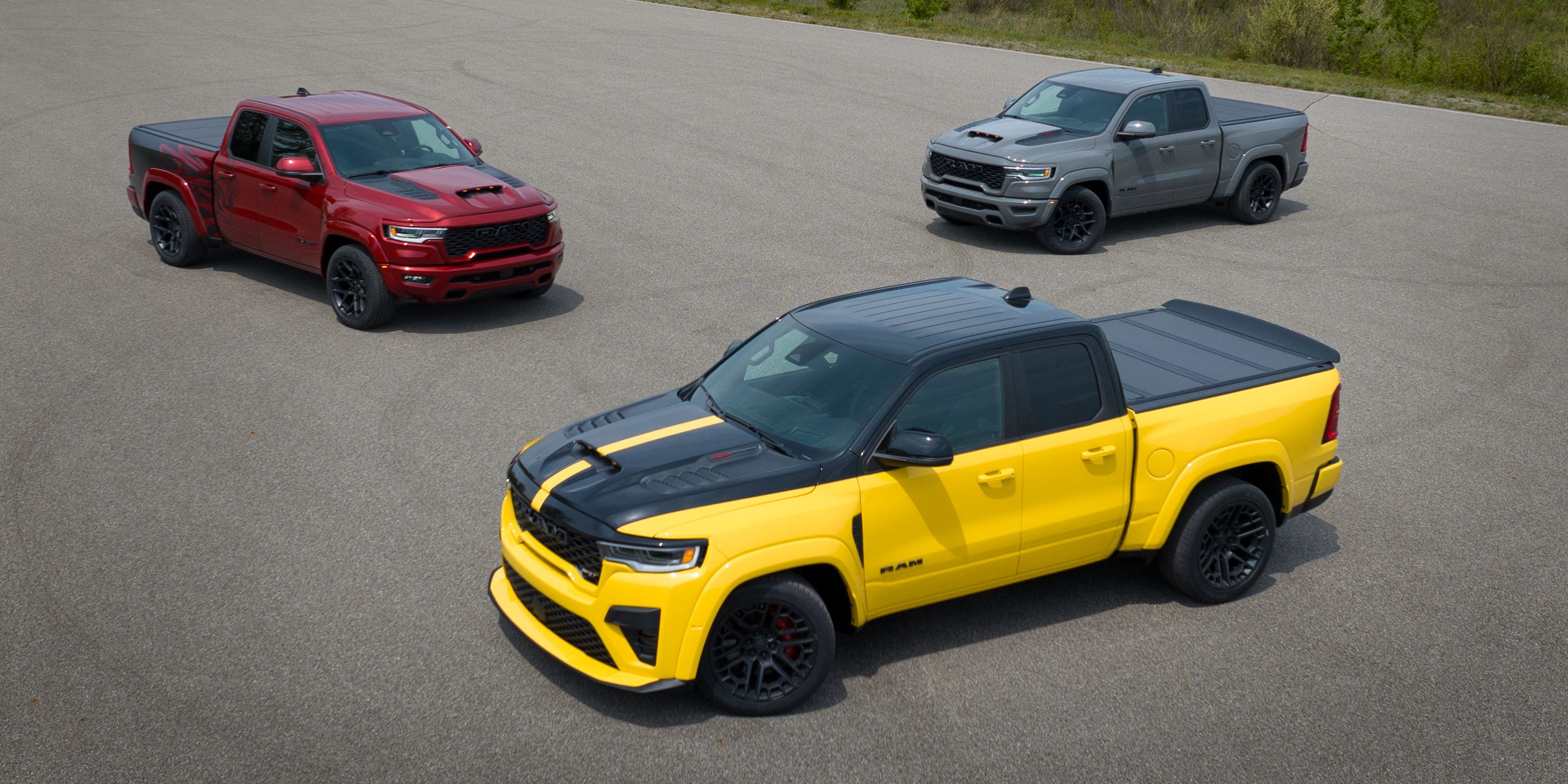
The 2500 HD Power Wagon takes Ram’s trailer-towing phenom and adds the sort of hardware you might expect from the sister brand with a seven-barred grille. The package includes mildly lifted suspension complete with Bilstein gas-charged shocks, an electronic front-sway-bar-disconnect system for improved articulation, locking differentials at both ends with simple toggles in the cabin, and a full slate of underbody skid plates protecting essentials such as the fuel tank and transfer case. All the right kit for a trek down genuine ORV trails.
Other key upgrades include a set of bespoke 20-inch wheels wrapped in 34-inch Goodyear Wrangler tires, unique bumpers with a powder-coated finish, and standard sill sliders for when the going gets extreme. The Power Wagon package usually also includes a factory-installed Warn winch, but that had to be ditched in order to make the diesel engine fit. Yes, that would have been a nice tool to have on hand.
Outside of the winch, the only major change to this Power Wagon compared with its siblings comes under the hood. In place of the standard 6.4-liter gasoline engine, customers can now option the 6.7-liter Cummins diesel inline-six. In High Output specification for the Power Wagon, the engine is good for 430 hp and 1075 lb-ft of torque. That power is sent to the transfer case by way of an eight-speed automatic. Unlike diesels of yesteryear, the slick-running Cummins is far from a disruptive force on a commute. Ram has managed to keep the racket down to a minimum with this latest generation of powertrains, helped in part by components like hydraulic roller lifters, common rail fuel systems, and rattle-reducing compacted-graphite-iron blocks.
Sure, there’s still a noticeable lump to the idle from outside the truck, but I’m willing to wager some drivers wouldn’t be able to tell that there’s a diesel under the hood. That is until you put your foot down, of course. The Power Wagon doesn’t feel as ludicrously quick as the Ford Super Duty offerings (as proved by Car and Driver’s 5.5-second sprint to 60 mph), but the wave of torque could star in its own disaster flick. The ratios in the automatic gearbox ensure I always have plenty of that shove under foot, averaging shifts at around 2200 rpm in normal use. Dip into the gas pedal a bit more and you may see a number that starts with a three before the inline-six gives it up. I averaged over 17 mpg during my time with the truck too, which is a significant upgrade from the figures I was seeing in my own 2500 HD gasser. That’s all to say that the diesel isn’t just for those on the jobsite these days, although a maximum payload rating of 2930 pounds and a tow rating of 19,630 pounds make it ideally suited for work.
Outside of its sheer size, the 2500 HD Power Wagon doesn’t ask for much of a sacrifice in daily operation. Ride quality isn’t on par with the half-tons and their fancy air suspension, but it is far more acceptable than older HDs despite the naturally stiff rear suspension. Combined with the hushed Cummins and the properly quiet cabin, this 2500 was a genuinely nice place to spend time. The tow-ready mirrors did produce a notable amount of wind noise at highway speeds, however. Those big 14-inch brakes at all four corners meant to haul down heavy trailers were more than sufficient for regular use, bringing a sense of sure-footedness to match the acceleration. The power-steering setup did feel overassisted at times, but it allowed me to maneuver the large all-terrains around city streets and parking lots easily. There was no getting around the length and width of the thing, but it’s no harder to drive than a typical truck, especially given Ram’s optional suite of cameras giving you every view imaginable.
Of course, the Power Wagon is not meant to be the 2500 lineup’s roadgoing star. The nameplate sits as part of Stellantis’s core off-road branding, and is in many ways just as important to that image as the RHO and the TRX. Michigan isn’t exactly known for its high peaks, so an off-road park would feature in the testing. In this case, that meant a 90-mile trek to Bundy Hill Off-Road Park. Located in Jerome, Michigan, the park was formerly an aggregate gravel pit that spit out millions of cubic yards of material used in concrete production. Seeing as how my connection to Ram all ties back to pouring concrete basements, it seemed like a natural fit.
On paper, the Power Wagon should have had no issues tackling just about anything that Bundy Hill had on offer. The truck features 13.2 inches of ground clearance in diesel spec, with approach, breakover, and departure angles of 26.1, 20.6, and 26.0 degrees.
That said, those figures only paint part of the story for this test. Ram’s eco-friendly air dam located on the front bumper was a genuine hindrance to any sort of serious wheeling. While the piece is technically made from a bendy bit of plastic designed to take a hit or two, doing so in practice was an uncomfortable experience (and not one that press fleets are fond of). After hanging up on the dam on one of my first attempts to crawl the park’s boulders, I left the rock garden before having to make a call to Ram. Next time you see a Power Wagon on a trail, take note that the air dam has likely already been removed by the owner, or whatever rock they just crested. That said, the hindrance isn’t really something the truck deserves to be knocked for. Annoying?. Yes, but the piece is very clearly made to be removable.
Off the rocks, the Power Wagon’s off-road credentials were apparent. With a dual-range transfer case and a pair of lockers to work with, the slick, sandy hills offered little resistance against the Power Wagon’s progress. That immense power curve meant I didn’t have to use many revs to climb, allowing the truck to claw its way forward on little more than idle. That large diesel lump did make itself felt on the downhill sections, however, where it was notably more nose-heavy than other Rams. The essentially weightless rear end also meant traction could become an issue with the nose buried in sticky mud.
Why It Matters
Sure, there’s still a noticeable lump to the idle from outside the truck, but I’m willing to wager some drivers wouldn’t be able to tell that there’s a diesel under the hood.
CarMotion Daily’s Take
Lucas BellHaving failed to extract myself from the mud pit, I perched on the tailgate of the 2027 Ram 2500 Power Wagon and awaited the arrival of the next group of fellow wheelers. Watch this space over the coming weeks. Supply chains, regulations, and consumer demand are reshaping the playbook faster than five-year plans can keep up. Dealer networks and service capacity will need to evolve alongside whatever the headline announcement implies. Regulatory filings, supplier contracts, and any production-volume adjustments usually trail the headline by a quarter or two. Stock price moves and dealer council chatter are leading indicators worth monitoring.
📝 Source & Copyright Notice
This story was first reported by RoadandTrack. For the full article with original photography and complete coverage, visit the source: Read the full story at RoadandTrack →